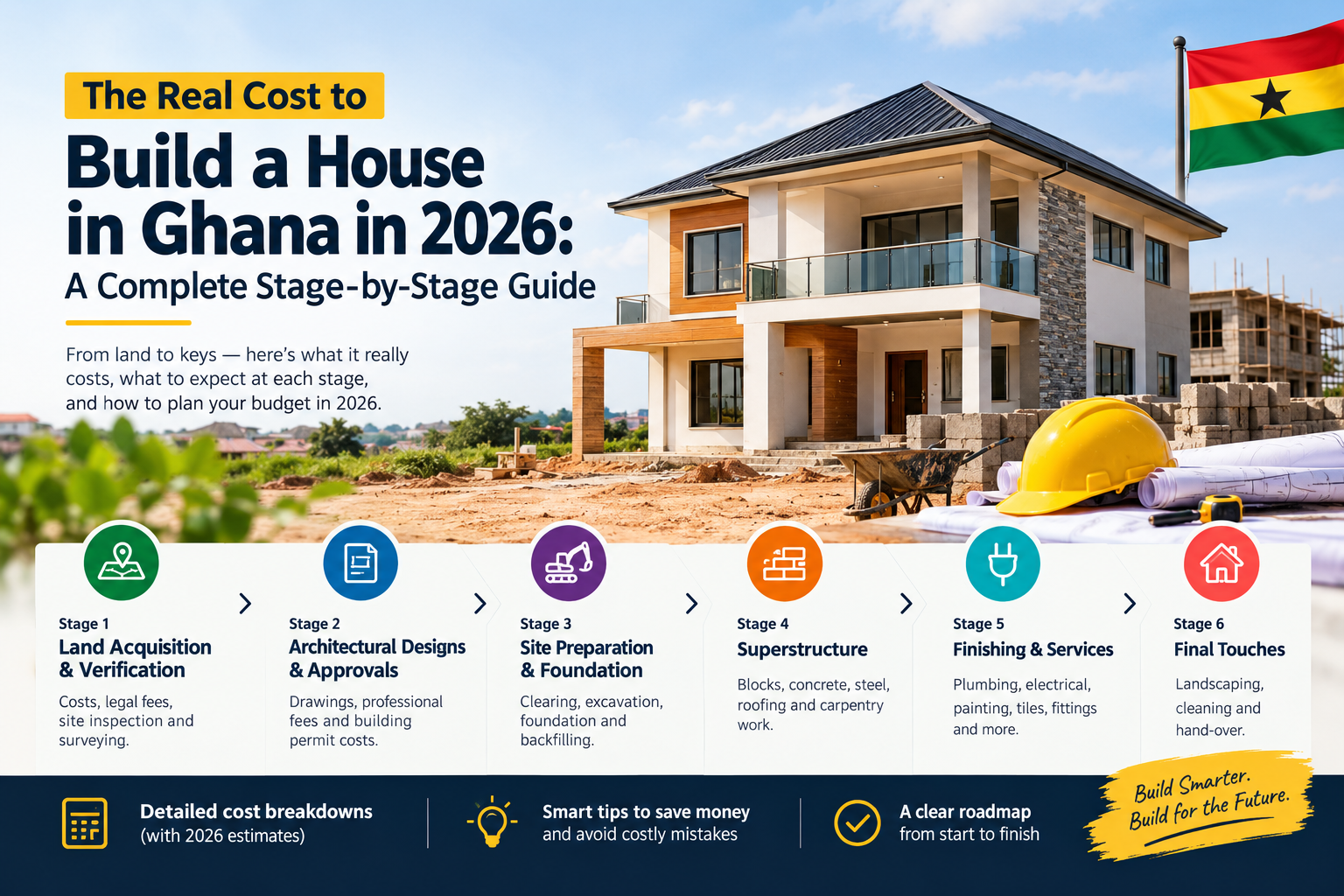
Building a house, office, shop, or commercial property in Ghana is a major investment. However, many projects face delays, legal disputes, or budget overruns because owners do not understand the proper construction process.
Whether you are building a home or business property, knowing the right steps can save you time, money, and stress.
This guide explains how construction works in Ghana step by step.
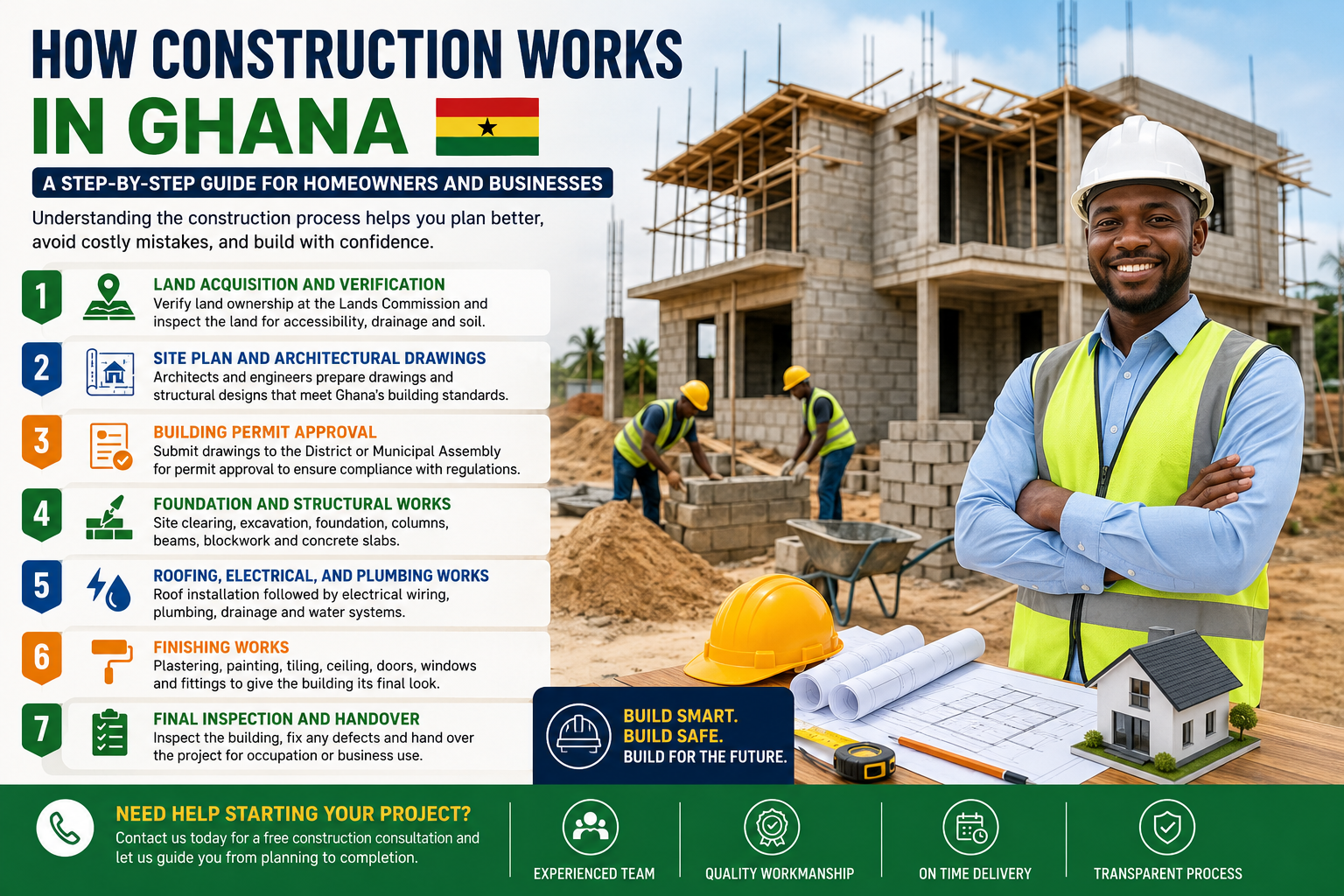
1. Land Acquisition and Verification
The first step is buying land legally and safely.
Before paying for land, verify ownership and title records through the Lands Commission Ghana and confirm the seller has legal authority to transfer the property.
You should also inspect the land physically to assess:
- Road access
- Flood risk
- Drainage
- Soil condition
- Utility availability
Poor land selection can greatly increase future construction costs.
2. Site Plan and Architectural Drawings
After land verification, the next stage is design.
A licensed architect or building designer prepares:
- Floor plans
- Elevations
- Roof design
- Site layout
- Interior planning
Structural engineers also prepare reinforcement and foundation drawings to ensure the building is safe and durable.
For professional standards, consult the Ghana Institution of Engineering.
3. Building Permit Approval
Before construction begins, you need a building permit from the relevant Metropolitan, Municipal, or District Assembly.
Permit approval ensures the building complies with:
- Zoning regulations
- Building setbacks
- Safety standards
- Height restrictions
- Environmental requirements
For city-based projects, check your local authority such as Accra Metropolitan Assembly.
Incomplete documentation is one of the biggest causes of permit delays.
4. Foundation and Structural Works
Once approvals are secured, physical construction begins.
This stage includes:
- Site clearing
- Excavation
- Foundation works
- Columns and beams
- Block laying
- Concrete slabs
The foundation must suit the soil type and building load. Errors at this stage are expensive to correct later.
5. Roofing, Electrical, and Plumbing Works
After the main structure is complete, key systems are installed:
- Roofing sheets or tiles
- Electrical conduit and wiring
- Plumbing pipes
- Drainage systems
- Water storage systems
Use certified professionals and quality materials to reduce future maintenance issues.
For electrical safety information, review Energy Commission Ghana.
6. Finishing Works
Finishing gives the building its final appearance and comfort.
Typical finishing includes:
- Plastering
- Painting
- Tiling
- Ceiling works
- Doors and windows
- Kitchen fittings
- Bathroom fixtures
- Lighting installation
Clients usually choose finishes based on budget and design preference.
7. Final Inspection and Handover
Before moving in or starting business operations, inspect the property carefully.
Check for:
- Cracks
- Leakages
- Faulty wiring
- Poor paintwork
- Plumbing defects
- Incomplete fittings
Any issues should be corrected before final handover.
Common Mistakes to Avoid
Many projects in Ghana fail because owners:
- Buy unverified land
- Start without permits
- Hire unqualified contractors
- Use cheap materials
- Skip supervision
- Change plans midway
- Underestimate total costs
Avoiding these mistakes protects your investment.
Conclusion
Understanding how construction works in Ghana helps you make smarter decisions and avoid expensive setbacks.
Whether you are building a family home, apartments, office, warehouse, or retail space, using the right professionals ensures quality, safety, and peace of mind.
Need Help Starting Your Project?
Contact us today for a free construction consultation and let us guide you from land purchase to project completion.